
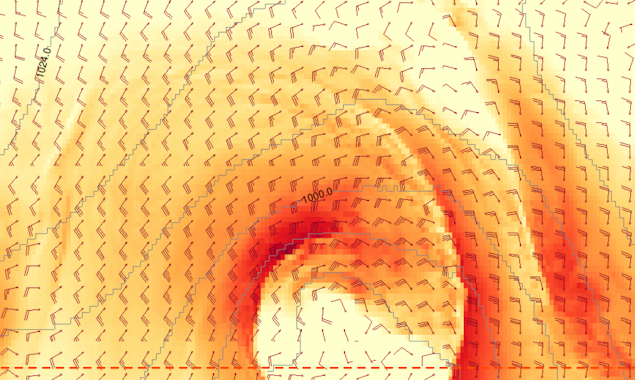
A weather forecast at sea is never just a prediction. It is a decision tool. It tells the master what may be waiting beyond the horizon, gives the shore team a clearer view of risk, supports route planning, protects cargo and helps the vessel move through uncertainty with discipline. On land, a forecast may influence comfort. At sea, it can influence safety, fuel consumption, arrival reliability and the entire commercial outcome of a voyage.
Modern shipping depends on accurate marine weather forecasting because the sea is always changing. Wind systems evolve, swell travels across ocean basins, pressure patterns deepen, visibility deteriorates, tropical systems intensify and local conditions can change faster than a fixed voyage plan can respond. The World Meteorological Organization describes marine services as a coordinated international effort to provide warnings, forecasts and sea bulletins for mariners, with ocean areas organized through METAREAs and delivered under recognized maritime safety systems.
For Interoutes, weather forecasting goes beyond a static document; it is continuously monitored and updated throughout the voyage and it is part of a wider operational process. Its weather routing and voyage optimization service uses the latest weather forecast, surrounding barometric systems, vessel specifications, cargo considerations and digital ship modelling to recommend safer and more efficient routes. After departure, voyage plans are continuously re-evaluated through updated weather conditions, vessel reports and performance monitoring.
This is the difference between receiving weather information and using weather intelligence. A forecast becomes valuable only when it is translated into a decision that fits the vessel. The same weather system can mean different things for different ships. A laden bulk carrier, a container vessel, a tanker in ballast and a smaller general cargo vessel will not experience the same wind and sea in the same way. Draft, speed, freeboard, cargo sensitivity, route exposure and commercial schedule all change the meaning of the forecast.
A strong weather forecast service therefore looks beyond wind speed and wave height. It reads the development of the system. It considers timing. It understands whether the vessel can safely pass before conditions worsen or whether an early adjustment will protect the voyage. It connects meteorology with seamanship. The objective is not to overwhelm the bridge with data, but to provide clear, practical guidance that helps the master and shore team act before weather becomes a problem.
Forecasting is also central to efficiency. Bad weather increases resistance, reduces speed, raises fuel consumption and can create avoidable emissions. A vessel that sails directly into adverse conditions may burn more fuel and still lose time. A vessel that uses forecast intelligence properly may take a slightly different track and achieve a better operational result. The best forecast is not the one that simply describes the sea. It is the one that helps the vessel make a better decision.
The importance of marine forecasts is recognized within the global maritime safety structure. The WMO and IMO framework provides marine meteorological warnings and forecasts to ships through systems connected with the Global Maritime Distress and Safety System, including SafetyNet and NAVTEX services. Yet commercial operators often need more than general bulletins. They need vessel specific interpretation, continuous monitoring and expert support that connects forecast conditions with the realities of the voyage.
This is where Interoutes’ marine experience becomes essential. The company emphasizes human to human expert assistance, with marine experts available around the clock to monitor weather conditions and routing options. Technology can process forecasts, but experienced mariners understand how those forecasts feel at sea. They know when a condition that looks manageable on a chart may create stress on the vessel, cargo or crew. They know that timing, heading and sea room can matter as much as the numbers themselves.
Weather forecasting also strengthens the relationship between ship and shore. When both sides share a clear operational picture, decisions become easier to explain and easier to support. The master remains responsible for safe navigation, but the office gains better visibility into the conditions influencing speed, consumption and routing. A reliable forecast creates a common language between the bridge and the operations desk.
In a market shaped by fuel cost, emissions pressure and schedule reliability, marine weather forecasting has become a strategic service. It protects safety, supports performance and helps shipping companies operate with fewer surprises. For every vessel at sea, the forecast is not only about tomorrow’s weather. It is about the quality of today’s decision.