
Shipping has always moved forward through a combination of seamanship, discipline and better tools. Charts became electronic. Weather analysis became more precise. Performance monitoring became more detailed. Voyage optimization became more intelligent. Yet even as technology has advanced, one truth has remained constant. The quality of a voyage still depends on the quality of human judgment.
This is the context in which Digital Twin Simulations for route optimization should be understood. Not as a replacement for the master, not as a machine that overrides marine expertise, and not as a final answer to every operational question. Instead, it should be seen as an advanced decision support tool that helps experienced people evaluate a voyage more deeply before and during execution.
For Interoutes, this direction reflects something larger than a single service feature. It reflects a company culture that continues to pursue technological progress while staying grounded in practical maritime knowledge. The goal is not innovation for its own sake. The goal is to create better support for ships, shore teams and routing specialists through tools that make operational understanding clearer, faster and more precise.
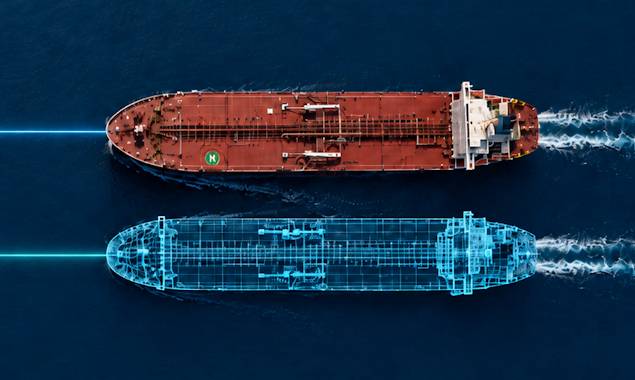
A digital twin in the maritime sense can be understood as a virtual representation of a vessel and its voyage behavior under real world conditions. It allows experts to simulate how the ship is likely to respond across different weather patterns, speed profiles, loading conditions and routing alternatives. Rather than looking only at one proposed route, the team can begin exploring a range of possible voyage scenarios and compare how the vessel may perform in each one. This adds depth to route optimization because it moves the discussion from simple prediction toward dynamic simulation.
The real value of this approach is that it can help reveal consequences before they become costs. A route may appear shorter on the chart but create higher resistance in forecast sea states. A speed decision may look commercially attractive but increase fuel burn disproportionately. A weather system may seem manageable in general terms, yet the vessel’s modeled response may suggest greater motion, speed loss or operational strain. By simulating these relationships in advance, routing specialists and operators gain a richer understanding of the voyage they are planning.
At the same time, it is important to present this capability honestly. Digital Twin Simulations for route optimization should be framed as work in progress within a wider research and development effort. It represents an evolving area where practical experience, vessel modeling, weather intelligence and data analysis are being brought together in a more advanced form. The strength of the concept is already clear, but its long term value will continue to grow through testing, refinement and operational learning.
That is why the human role remains central. A digital twin can simulate. It can compare. It can highlight likely outcomes across alternative voyage decisions. But it does not carry command responsibility, understand every commercial nuance or replace the judgment that comes from years at sea and in operations. The interpretation of simulated results still belongs to experts who understand ships, cargoes, weather and the realities of maritime trade. Technology becomes powerful only when it remains connected to human expertise.
For a company like Interoutes, this balance matters. The business has always stood at the meeting point of marine knowledge and operational support. Digital twin development fits naturally into that identity because it strengthens the analytical side of route optimization without weakening the human side. It can help experts test assumptions, improve route recommendations, understand vessel specific behavior more clearly and build stronger confidence around voyage planning decisions.
This can be especially valuable in a shipping environment where every route carries multiple pressures at once. Safety must remain the first priority. Fuel efficiency matters commercially. Emissions performance matters strategically. Schedule reliability matters to operators and charterers. Vessel behavior matters technically. A digital twin can help bring these considerations together in one simulated environment, giving the routing and operations team a clearer basis for decision making before the voyage unfolds in the real sea.
It is also part of a wider story about how shipping companies prepare for the future. The most resilient maritime organizations are not those that choose between tradition and innovation. They are the ones that combine them intelligently. They invest in new methods while respecting the complexity of operations. They adopt technology in a way that strengthens professional judgment rather than weakening it. Digital Twin Simulations represent exactly this kind of forward looking but disciplined development.
As a research and development direction, the concept also demonstrates a commitment to continual improvement. It shows that Interoutes is not content with relying only on established methods, even while continuing to value them. The company is actively exploring ways to make route optimization more insightful, more vessel specific and more responsive to the growing demands of modern shipping. This includes the belief that advanced simulations can eventually provide even better support for fuel efficiency, route planning, weather exposure analysis and emissions conscious decision making.
What matters most is the philosophy behind the tool. Digital Twin Simulations are not being developed to remove people from the process. They are being developed to help people make better decisions within the process. The route will still be assessed by experts. The voyage will still be shaped by professional judgment. The master will still remain at the center of navigational responsibility. The simulation simply adds another layer of insight that can improve the quality of that human decision.
In that sense, Digital Twin Simulations for route optimization are not just a technology story. They are a maritime intelligence story. They show how data, vessel modeling, weather analysis and operational expertise can move closer together in a way that serves the real needs of shipping. They reflect ambition, but also realism. They are promising, but still developing. They are advanced, but still human guided.
For Interoutes, this is exactly the point. Technological advancement has value when it supports expertise, not when it tries to replace it. As research and development continues, Digital Twin Simulations can become a meaningful part of a broader effort to keep route optimization smarter, more adaptive and more aligned with the future of maritime operations.