
Beyond Market Uncertainty: Key Takeaways from NAVIGATOR 2026
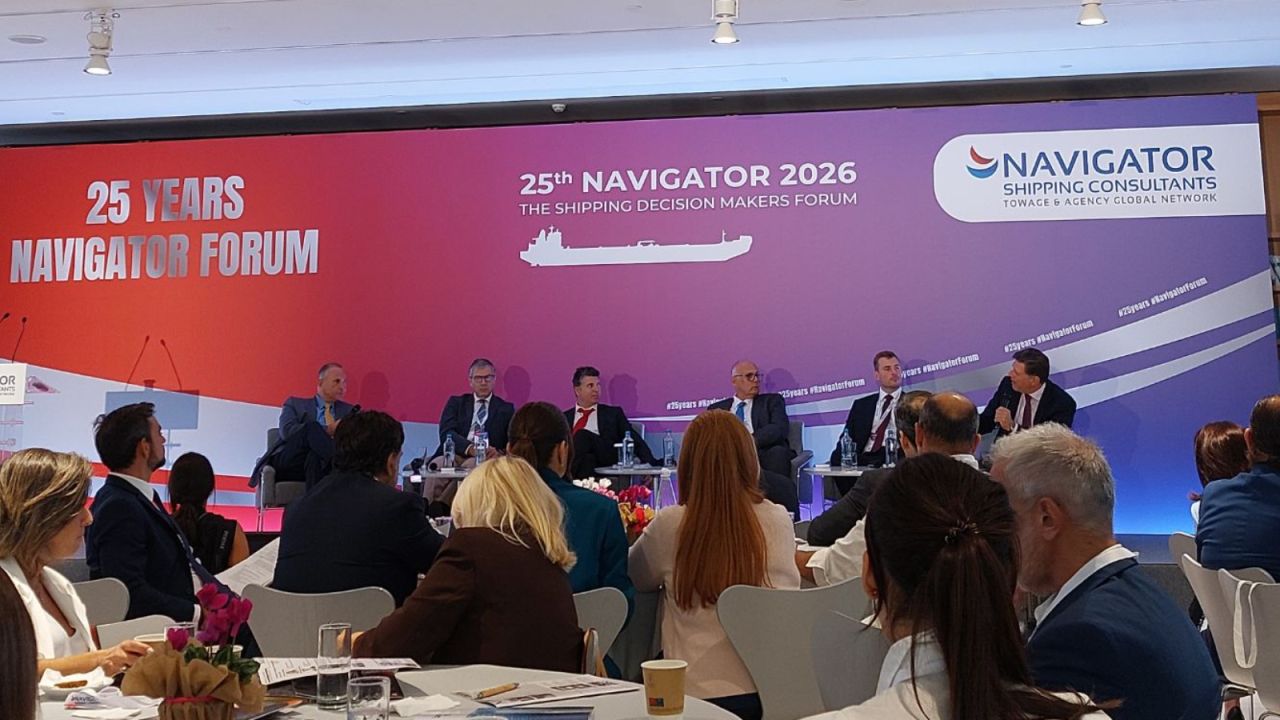
Why operational efficiency, voyage optimization and informed decision-making matter more than ever.
Attending the 25th NAVIGATOR 2026 Shipping Decision Makers Forum offered an opportunity to listen to different perspectives from across the maritime industry and, more importantly, to reflect on the forces that are beginning to define the next phase of shipping. Market conditions, geopolitical instability, decarbonisation, digitalisation and the human element may appear to be separate discussions, but throughout the Forum they repeatedly converged around one central question. How can shipping remain competitive, efficient and resilient in an environment where uncertainty is becoming a permanent part of doing business?
One of the strongest impressions from the discussion around the current shipping market was that the industry remains in a relatively favorable position, yet there is little certainty about how long present conditions will continue. Shipping has always been cyclical, and periods of strength can easily create the temptation to focus on immediate performance rather than preparation for what comes next. My takeaway was different. Strong markets should be used to strengthen a company before conditions become more difficult. Improving operational efficiency, investing in people, adopting better decision making tools and strengthening competitiveness are not defensive measures. They are investments in the ability to perform throughout the entire market cycle.
This becomes even more important when geopolitics is added to the equation. The discussion around the sea and its role in geopolitics reinforced how closely global shipping is now connected with political developments, regional conflicts, energy security and changing trade patterns. What happens politically in one part of the world can quickly influence shipping routes, voyage duration, insurance considerations, fuel consumption and operational costs thousands of miles away. Geopolitical risk is no longer something that can be treated only as a strategic issue at management level. It increasingly becomes an operational reality for individual voyages.
For those of us working closely with vessel routing and voyage planning, this is particularly relevant. A voyage can no longer be approached simply as the movement of a vessel between two geographical points. Weather conditions, navigational risks, commercial requirements, geopolitical developments and fuel performance all interact. In such an environment, flexibility and access to reliable information become increasingly important. The ability to reassess a voyage as circumstances evolve and to combine accurate data with experienced judgement can make a meaningful difference to both safety and operational performance.
The same practical perspective is necessary when discussing decarbonisation. The maritime industry has ambitious environmental objectives and faces increasing regulatory pressure, but the transition cannot depend exclusively on solutions that may become widely available at some point in the future. Alternative fuels, new propulsion technologies and supporting infrastructure will undoubtedly influence the long term direction of shipping, but availability, cost and commercial viability remain major considerations.
At the same time, there are measures that can be applied today. Weather routing and voyage optimization are existing tools that can support lower fuel consumption and emissions while maintaining safety as the fundamental priority. Better use of available data, more accurate voyage planning and continuous performance monitoring can generate incremental improvements across individual voyages. When repeated across a fleet and over time, those improvements become increasingly significant.
For me, this was one of the most important themes of the Forum. Decarbonisation is not only about identifying the fuel of the future. It is also about operating today's vessels as intelligently and efficiently as possible. The industry needs innovation, but it also needs practical solutions that can be implemented under real operating conditions.
Digitalisation and artificial intelligence naturally form part of that evolution. The maritime sector now has access to an unprecedented volume of information, increasingly sophisticated analytical tools and stronger connectivity between vessels and shore based teams. These developments create significant opportunities to improve safety, efficiency and situational awareness.
Yet technology alone does not make a good decision. The value of digitalisation lies in its ability to strengthen human judgement rather than replace it. This is particularly evident in weather routing. Forecasting models, satellite data, vessel performance information and advanced analytical systems provide powerful capabilities, but their effectiveness depends on how that information is interpreted and applied.
The combination of reliable data, specialized analysis and professional experience remains essential. A routing recommendation exists within a changing operational environment, where safety, weather, vessel characteristics, commercial requirements and the judgement of those onboard must all be considered. Artificial intelligence can help process information faster and identify patterns more efficiently, but maritime decision making continues to require people who understand the operational reality behind the data.
Bringing these discussions together leads to what I consider the broader message from this year's Forum. The real challenge for shipping is not simply to perform well under today's conditions, but to remain resilient when those conditions change.
Market cycles will change. Regulations will evolve. Geopolitical events will continue to affect global trade. New technologies will enter the industry, while environmental expectations will become increasingly demanding. Companies cannot control all of these variables, but they can control how prepared they are to respond to them.
For International Routing Services, this reinforces the importance of operational efficiency, reliable information, experienced people and strong cooperation between ship and shore. It also strengthens our belief that voyage optimization should be seen not simply as a routing service, but as part of a broader approach to more informed maritime operations.
The companies that are best prepared for the next shipping cycle will not necessarily be those that try to predict every change before it happens. They will be those that build the ability to adapt when change arrives.
Resilience in shipping ultimately comes from better decisions, made with better information, supported by technology and strengthened by human experience.